Published: 22nd April 2026
Updated: 24th August 2026
Ecommerce fulfilment is the process of storing your stock, then picking, packing and shipping each order after a customer buys from you online, and handling any returns that come back. It is also called order fulfilment, and for online sellers the two terms mean the same thing.
It is easy to picture fulfilment as simply posting parcels, but it covers the whole journey a product takes after the sale: receiving stock into a warehouse, storing it so it can be found quickly, processing each order, packing it correctly, getting it to the customer, and dealing with returns. Each of those stages carries a cost, and each is a point where things can go wrong.
This guide explains what happens at every stage, sets out the main ways sellers handle fulfilment, and gives an honest view of when outsourcing is worth it and when it is not. If you already know you want to outsource, our ecommerce fulfilment services page covers how that works in practice.
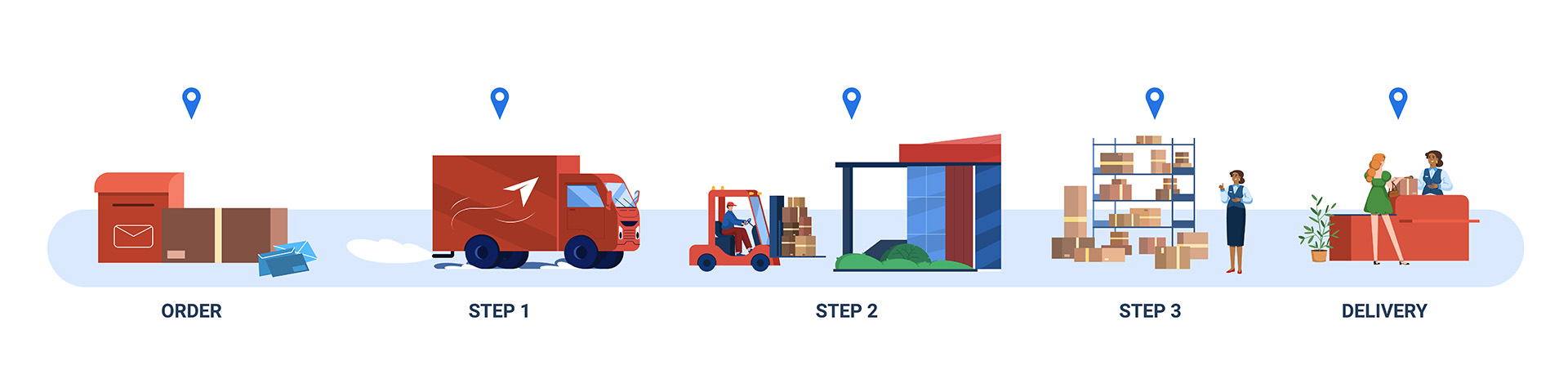
Every online order follows the same basic journey, whether one person is packing at a kitchen table or a warehouse team is shipping thousands of orders a day. Here is what actually happens at each stage, and where each one tends to fail.
Fulfilment starts before any order arrives. Stock comes into the warehouse from your suppliers or manufacturer and is booked in, checked against what was expected, and recorded so it can be located later. This is the stage where accuracy is either established or lost. If quantities, product codes and condition are not verified properly on arrival, every stock figure after that point is unreliable. Good goods-in also catches damaged or short deliveries early, before they become a customer's problem. Keeping those stock levels accurate from here on is the job of your stock management system.
Once checked in, stock is put away in specific warehouse storage locations rather than left in a general pile. The point is not just to hold it, but to hold it so it can be picked quickly and accurately. Fast-moving lines are usually kept in the most accessible spots, while slower or bulkier items sit elsewhere. Sensible putaway is what makes the picking stage fast and reduces the chance of the wrong item going out.
When a customer places an order, the details need to reach the warehouse. With connected fulfilment software, orders flow automatically from your website or marketplace into the system that tells staff what to pick, with no manual re-keying. This matters, because downloading orders by hand and working from spreadsheets is slower and far more error-prone. Pickers then locate each item, ideally confirming it by scanning a barcode so the right product is matched to the right order.
Packing is more consequential than it looks. It protects the product in transit, applies the correct shipping label, and confirms that what is in the box matches the order.
Weighing the parcel and matching packaging to the item also keeps shipping costs down. Once packed, an order is assigned to a courier, tracking is generated, and the customer is notified. In the UK that usually means one of the main carriers, such as Parcelforce, UPS, and DHL, chosen on cost, destination and delivery speed. The shipping step is the last outbound stage, but it is only as reliable as the picking and packing that came before it.
Returns are part of fulfilment, not a separate problem bolted on at the end. A returned item has to be received, inspected, then restocked if it is resaleable or quarantined if it is not, with the customer refunded or sent a replacement. Handled slowly, returns tie up stock you could be selling and leave customers waiting. Handled well, they are simply another routine part of the operation. Our returns service covers how this works day to day.
Fulfilment sits between the sale and the customer's experience of your brand. You can invest in a good product, a polished website and strong marketing, but if orders arrive late, damaged or wrong, that is what the customer remembers. The operational side is not separate from the brand: it is where the brand is either confirmed or undermined.
It also has a direct effect on margin, and this is where many sellers underestimate it. When you pack orders yourself, fulfilment looks cheap, because the cost is hidden inside your own time, your space and your unpaid hours. The real cost includes storage, packaging materials, the labour of picking and packing, shipping admin, and the money lost to failed deliveries, picking errors and returns. None of that shows up as a line on an invoice when you are doing it at home, which is exactly why it is easy to miss.
That does not make outsourcing the automatic answer. The honest first step is simply knowing what your current setup actually costs you, in money and in time, before you compare it with anything else.
There is no single right way to handle fulfilment. A few common models cover most sellers, and the sensible choice depends on your order volume, your product, and how much of your week fulfilment is consuming.
| In-house | 3PL | FBA | Dropshipping | |
|---|---|---|---|---|
| What it is | You store and ship orders yourself | A provider stores your stock and ships orders for you | Amazon stores and ships your stock | A supplier ships directly to the customer |
| Best suited to | Low volumes, or products needing special handling | Growing sellers across one or more channels | Sellers whose main channel is Amazon | Sellers testing products without holding stock |
| Control | Full | High, through the provider's software | Limited, on Amazon's terms | Lowest |
| Cost model | Your own time, space and overheads | Pay for storage and the orders you use | Amazon's storage and fulfilment fees | Supplier's price per order |
| Scales | Hard past a point | Yes | Yes, within Amazon | Yes, but quality risk grows |
For most growing ecommerce sellers, the real choice is between staying in-house and moving to a 3PL. A few signs usually indicate you have outgrown doing it yourself:
Working out which provider is right is a separate question, and it deserves its own attention. Our guide to what a 3PL is and how to choose a partner covers the full comparison.
A few misconceptions come up repeatedly, and they are worth clearing up.
Ecommerce fulfilment is the engine running behind every online order: storing stock, getting orders picked, packed and shipped, and dealing with returns. Whether to keep it in-house or outsource comes down to your order volume, your margins, and how much of your week is disappearing into packing tape. The useful question is not whether outsourcing sounds appealing, but what your current setup actually costs you once time and errors are counted.
If you are weighing that up, our ecommerce fulfilment services page shows how outsourcing works, or you can get a free, no-obligation quote for your own order volume. To go deeper on the models, start with our guide to what a 3PL is and how to choose a partner.
Storeship has been independently owned and operated since 2009, currently storing and fulfilling for over 700 UK and international ecommerce sellers. Find out more on our About Storeship page.
In practice, yes. Order fulfilment is the general term for getting an order to a customer; ecommerce fulfilment is the same process applied specifically to online orders. Most guides, including this one, use them interchangeably.
A fulfilment centre is a warehouse built around processing and shipping individual customer orders, rather than storing goods in bulk for long periods. Stock moves through it fairly quickly.
It depends on how much you store, how many orders you ship, the size of your items, and which services you use. Costs are usually a mix of storage, a pick and pack charge per order, and shipping, with order volume and product complexity affecting the rate. You can see how this breaks down on our fulfilment pricing page, or try the service through a free fulfilment trial.
A 3PL, or third-party logistics provider, is a company that handles storage, order fulfilment and shipping for other businesses under contract. It is the usual route for sellers who want to outsource. Our 3PL guide explains what they do and how they compare to related services.
Yes. Some providers offer fulfilment from within the EU, which lets orders for European customers ship locally rather than crossing the border parcel by parcel. That can reduce customs friction and delivery times for EU orders after Brexit. Our EU fulfilment page covers the options.
Some providers offer lower-impact packaging and consolidated shipping as part of their standard service. If sustainability matters to your brand, see our green fulfilment options.
Get in Touch
Tel: 07427 345678
Track my Package


Information
About Us
Privacy Policy
Resources
Environment Information
FAQ